Views: 0 Author: Site Editor Publish Time: 2026-11-25 Origin: Site
Special steel bar rolls must provide reliable wear resistance, dimensional accuracy, and stable performance when rolling demanding steel grades such as alloy steel, bearing steel, and tool steel. High-speed steel (HSS) rolls are well suited to these applications because their hard carbides and alloyed microstructure help resist wear and maintain roll pass geometry under demanding rolling conditions. Compared with certain conventional cast iron rolls, HSS rolls can offer longer rolling campaigns and reduce the frequency of roll changes when properly matched to the mill's operating conditions. Their performance depends on material composition, manufacturing quality, cooling efficiency, and maintenance practices. Understanding these factors helps mill engineers and purchasing teams evaluate suitable HSS roll specifications, improve production consistency, and manage long-term operating costs.
Superior Wear Resistance: HSS rolls deliver significantly higher tonnage per millimeter of wear compared to traditional cast iron, directly reducing mill downtime for roll changes.
Thermal Stability Imperative: The high hardness of HSS is maintained at elevated rolling temperatures, but this requires strict, high-volume cooling protocols to prevent catastrophic thermal cracking.
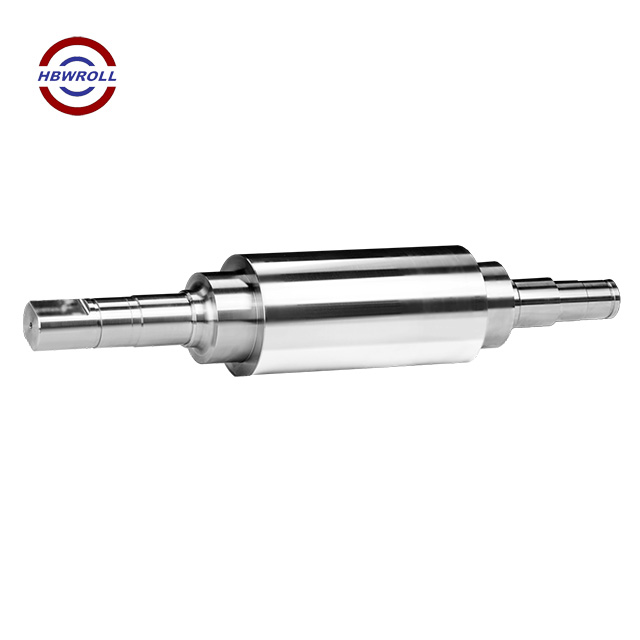
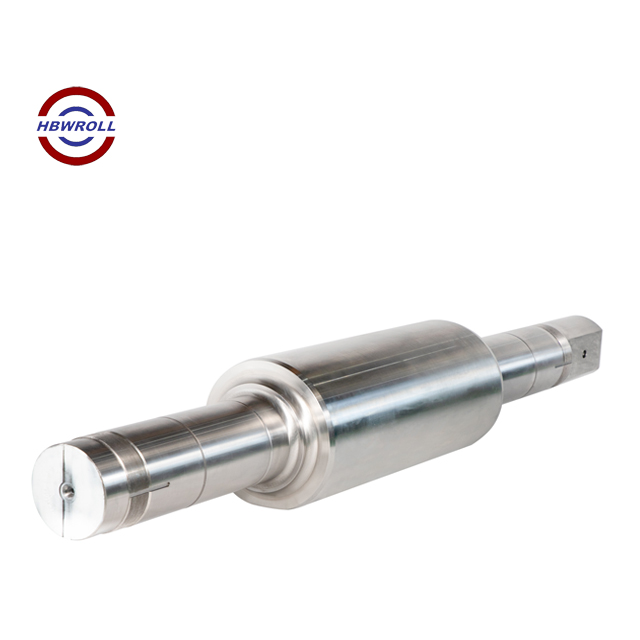
Duplex Construction & Form Factors: Optimal special steel bar rolls utilize a composite structure—typically via vertical centrifugal casting—combining a highly alloyed HSS working layer with a tough core, though HSS roll rings are also utilized in specific finishing block applications.
Table of Contents
High-nickel-chromium cast iron and standard ductile iron fail prematurely when rolling demanding alloys like tool steel, bearing steel, or stainless bar. These materials possess high deformation resistance. This resistance generates intense friction and heat within the roll bite. Traditional roll surfaces quickly degrade under these conditions. They develop fire cracks, severe wear banding, and localized spalling. As the surface breaks down, the friction profile changes. This leads to unstable rolling conditions. Mill operators must perform frequent roll changes to maintain product quality. This constant interruption destroys production efficiency and increases the workload on the roll shop. When rolling grades like 4140 or 316L, cast iron simply cannot hold its pass profile long enough to sustain a continuous campaign.
Rolling special steel bars requires far tighter dimensional tolerances than standard structural shapes or commercial wire rods. Defect thresholds in special steel production are practically zero. Any surface imperfection on the roll transfers directly to the final bar. Quality control will immediately reject these defective bars. Standard long products can tolerate minor surface variations. Special steel applications, such as automotive components or aerospace fasteners, demand absolute surface integrity. The high alloy content of special steels means they retain their strength at high rolling temperatures. They exert massive separating forces on the mill stands. Traditional rolls lack the compressive strength and wear resistance to handle these forces over a long campaign.
Evaluating roll performance requires specific, measurable metrics. Success is defined by surface finish consistency, dimensional accuracy over the entire campaign, and absolute resistance to thermal shock. The microstructure and hardness of the roll directly dictate the final quality of the rolled product. A successful roll must maintain its pass profile without widening or roughening. It must resist the propagation of thermal fatigue cracks. These cracks occur as the roll repeatedly heats up in the bite and cools down under the water sprays. Achieving these criteria requires a fundamental shift in roll metallurgy. Mills must move away from simple iron-carbon matrices to complex, highly alloyed steel structures.
The superior performance of HSS rolls stems from a precisely engineered chemical composition. Carbon, Vanadium, Chromium, Molybdenum, and Tungsten form the foundation of the HSS matrix. Carbon provides the necessary base hardness and combines with other elements to form carbides. Vanadium forms MC-type carbides. These are extremely hard and provide the primary abrasive wear resistance. Chromium enhances the hardenability of the matrix and improves oxidation resistance at high temperatures. Molybdenum and Tungsten form M2C and M6C carbides. These complex carbides prevent grain growth during high-temperature exposure. They also provide secondary hardening during the tempering process. The synergistic effect of these elements creates a microstructure capable of withstanding severe rolling environments.
Controlling alloy segregation is important for achieving consistent hardness and wear resistance in HSS roll working layers. During solidification, alloying elements and carbide-forming phases may become unevenly distributed, depending on the material composition and casting conditions. In centrifugally cast HSS rolls, differences in phase density and solidification behavior can also contribute to carbide segregation. Manufacturers therefore need to control the alloy composition, pouring temperature, rotational conditions, and solidification process to reduce undesirable segregation. Appropriate process control and quality inspection help improve the uniformity of the working layer and reduce the risk of uneven wear during rolling.
The specific morphology and distribution of carbides in HSS prevent matrix softening during operation. When rolling special steel bars, the surface temperature of the roll spikes dramatically within the bite. In traditional cast iron, this heat causes the metallic matrix to soften and deform. In HSS, the network of complex carbides remains stable. These carbides act as a rigid skeleton. They support the martensitic matrix and prevent plastic deformation. The high-temperature stability of these carbides ensures that the pass profile remains sharp and accurate. This holds true even after thousands of tons of steel have passed through the stand.
Centrifugal casting is an established manufacturing method for composite HSS rolls, allowing manufacturers to produce a wear-resistant outer working layer combined with a tougher core. The casting process must be carefully controlled to manage solidification, carbide distribution, and bonding quality. Other manufacturing routes, including continuous pouring processes for composite rolls and forging for certain solid roll designs, may also be used depending on the required structure and application. Each method has different advantages and manufacturing constraints. For bar mill applications, the appropriate process should be evaluated according to roll dimensions, working layer requirements, core properties, and quality inspection results.
HSS rolls are available in different structural configurations to suit the requirements of individual mill stands. Composite rolls generally combine a wear-resistant HSS working layer with a tougher core material, such as ductile iron or steel, to provide the required surface properties and mechanical support. Other roll designs may use a single material, depending on the application. HSS roll rings are separate rolling components mounted on suitable shafts or holders, making them useful in certain bar and wire rod mill configurations. The appropriate structure depends on roll dimensions, rolling loads, stand arrangement, and the required maintenance or replacement method.
Thermal stability demands a rigorous, multi-stage heat treatment process. After casting, the rolls undergo high-temperature austenitizing followed by rapid quenching. This hardens the matrix but leaves the material brittle and full of residual casting stresses. To achieve the necessary toughness, foundries subject the rolls to multiple high-temperature tempering cycles. Tempering relieves internal stresses and forces the transformation of retained austenite into stable martensite. The amount of retained austenite and the final matrix structure should be controlled according to the specified HSS grade and heat treatment procedure. Unwanted microstructural changes may affect dimensional stability, residual stress, and mechanical performance. Properly designed heat treatment helps achieve the required balance of hardness, toughness, and structural stability.
Mandatory post-manufacture inspections verify structural integrity before the roll ever leaves the foundry. Ultrasonic Testing (UT) is deployed to confirm a flawless metallurgical bond between the HSS shell and the core material. Any delamination or void at the boundary layer will cause the shell to spall off under rolling pressure. UT also detects internal shrinkage or porosity. Dye Penetrant Inspection (DPI) or Magnetic Particle Inspection (MPI) ensures the working surface is completely free of micro-cracks. Strict adherence to these Non-Destructive Testing (NDT) protocols separates premium special steel bar rolls from inferior alternatives.
Standard NDT Protocols for HSS Rolls | ||
Inspection Method | Target Defect | Acceptance Criteria |
|---|---|---|
Ultrasonic Testing (UT) | Core-shell bond delamination, internal voids | 100% bond integrity, zero internal voids > 2mm |
Dye Penetrant Inspection (DPI) | Surface micro-cracks, porosity | Zero linear indications on the working surface |
Magnetic Particle Inspection (MPI) | Sub-surface cracks, inclusions | Zero crack indications in the pass profile |
Hardness Testing (Equotip/Brinell) | Hardness variation across the barrel | Maximum deviation of +/- 2 HRC across the working face |
Continuous bar production lines subject rolls to severe thermal fatigue. The roll surface heats up rapidly upon contact with the hot steel and is immediately quenched by high-pressure cooling water. HSS offers distinct thermal expansion coefficients compared to traditional cast iron. Because HSS conducts heat differently, pass design and cooling configurations must account for these thermal dynamics. If the thermal gradient between the surface and the core becomes too steep, thermal fatigue cracks will initiate. When properly cooled, the high-temperature strength of the HSS matrix prevents these micro-cracks from propagating deep into the shell. This mechanism vastly outperforms traditional materials in continuous operation.
Evaluating performance relies on tracking the tonnage rolled per millimeter of roll wear. HSS rolls drastically reduce regrinding frequency and significantly increase campaign length. By maintaining their pass profile longer, they minimize mill downtime for roll changes. This boosts overall production efficiency and increases the yield of prime quality bars. Mill managers must track the wear rates accurately to optimize their roll dressing schedules. Extending the campaign length directly increases the output of the mill. Operators can push more billets through the stand before the pass profile degrades beyond acceptable tolerances.
Sustained surface integrity translates directly to fewer defects on the finished product. Traditional rolls degrade and roughen, which imprints micro-defects onto the steel bar. HSS rolls wear smoothly and evenly. This smooth wear pattern drastically reduces the occurrence of seams, laps, and scratches on the rolled product. For special steel grades destined for cold heading, machining, or fatigue-resistant applications, this flawless surface finish is non-negotiable. The ability of HSS to retain a polished pass profile ensures the final product consistently meets strict metallurgical and dimensional standards.
Effective roll cooling is important for controlling thermal fatigue, surface oxidation, and wear during special steel bar production. The required cooling water pressure, flow rate, spray coverage, and nozzle arrangement depend on the roll material, mill configuration, and rolling conditions. Insufficient or uneven cooling can cause localized overheating and increase the risk of surface cracking or spalling. Mill operators should inspect the existing cooling headers, check nozzle condition and water distribution, and compare the operating parameters with the roll manufacturer's recommendations. Cooling system modifications should be based on identified performance limitations rather than a universal pressure requirement.
Verify that the cooling water pressure and flow rate meet the requirements of the selected HSS roll grade and mill operating conditions.
Position and adjust cooling headers according to the specified spray coverage, nozzle design, and roll cooling requirements.
Utilize flat-fan nozzles to ensure overlapping, continuous water coverage across the entire pass profile.
Implement inline water filtration to prevent nozzle clogging from mill scale and debris.
Set up automated flow monitoring to trigger an immediate mill stop if water pressure drops below the critical threshold.
The friction and biting behavior of HSS rolls depends on surface condition, oxide film characteristics, pass design, and rolling conditions. Under certain operating conditions, differences in surface friction may affect the ability of the roll to grip the incoming bar. If the available friction is insufficient for the required reduction, slipping or unstable rolling may occur. Mill operators should evaluate pass design, rolling reduction, and surface condition when introducing a different roll material. This is particularly critical in the earlier intermediate stands where the reduction ratios are higher. Pass designers may need to modify the entry angles or slightly roughen the pass profile during the initial grinding. This ensures a secure bite without compromising the final product quality.
Redressing HSS rolls demands specialized equipment and modified procedures in the roll shop. The hard carbides in HSS rolls can increase grinding difficulty and abrasive wear compared with some conventional roll materials. Suitable grinding wheels, including appropriately specified CBN or other abrasives, should be selected according to the roll material, grinding equipment, and required surface finish. The machining parameters must be carefully calibrated. Pushing the grinding process too fast will generate excessive heat, causing grinding cracks on the HSS surface. Roll shop personnel require specific training to handle HSS materials safely and effectively.
Recommended Grinding Parameters for HSS Rolls | ||
Parameter | Standard Cast Iron | High-Speed Steel (HSS) |
|---|---|---|
Abrasive Material | Aluminum Oxide / Silicon Carbide | Cubic Boron Nitride (CBN) |
Wheel Speed | 30 - 35 m/s | 25 - 30 m/s |
Workpiece Speed | 15 - 20 rpm | 10 - 15 rpm |
Depth of Cut (Roughing) | 0.05 - 0.08 mm | 0.01 - 0.02 mm |
Coolant Flow | Standard flood cooling | High-pressure, directed flood cooling |
Proper handling, storage, and startup procedures help reduce the risk of damage to HSS rolls. Rolls should be protected from mechanical impact, corrosion, and unsuitable storage conditions before installation. During startup, mill operators should consider the roll manufacturer's recommendations for temperature management, rolling load, and cooling water application. Where a controlled warm-up procedure is specified, it should be carried out using an approved method suitable for the roll design and mill configuration. Avoiding abrupt changes in thermal and mechanical loading can help reduce unnecessary stress on the working layer and core.
HSS special steel bar rolls are a highly engineered upgrade that requires precise alignment between roll metallurgy, pass design, and mill operational practices. When properly matched to the mill application and operating conditions, HSS rolls can improve wear resistance, reduce roll change frequency, and support more consistent bar dimensions and surface quality. Procurement and engineering teams must evaluate vendors based on their centrifugal casting capabilities, non-destructive testing transparency, and their ability to customize alloy compositions for specific mill stands.
Review cooling water pressure, flow rate, nozzle alignment, and spray coverage to confirm that the system meets the selected HSS roll specifications.
Upgrade roll shop grinding equipment to include CBN wheels and establish low-feed, high-precision grinding parameters.
Initiate a pilot program by installing HSS rolls on a single finishing stand to establish baseline wear rates and adjust pass schedules.
Follow the roll manufacturer's handling and startup recommendations to reduce the risk of thermal and mechanical damage.
A: HSS rolls can provide longer rolling campaigns and lower wear rates than certain conventional cast iron rolls under suitable operating conditions. However, the actual service life depends on the steel grade, mill stand, rolling load, cooling performance, and roll design. Buyers should compare tonnage per groove, wear depth, regrinding frequency, and total roll consumption using data from comparable mill applications.
A: Centrifugal casting is an established method for manufacturing composite HSS rolls with a wear-resistant working layer and a tougher core. It offers production and structural design advantages for suitable roll applications. However, carbide segregation, casting defects, and bonding quality must still be controlled through the manufacturing process and verified by appropriate inspections.
A: Solid duplex rolls feature an HSS shell cast over a ductile core and are used in intermediate and early finishing stands. HSS roll rings are solid HSS components mounted onto a separate shaft, typically reserved for high-speed wire rod and bar finishing blocks.
A: While possible, they are most technically beneficial in intermediate and finishing stands. In these positions, surface finish and dimensional tolerance are critical, and the lower friction coefficient of HSS won't cause severe bite angle issues.
A: Roll shops must upgrade to specialized grinding wheels, such as Cubic Boron Nitride (CBN) or diamond. They must also adjust feed rates and cutting depths, as standard aluminum oxide wheels will degrade rapidly against the hard HSS carbides.
A: Inadequate cooling leads to steep thermal gradients, causing micro-cracking and eventual spalling of the HSS shell. High-pressure, targeted cooling is mandatory to break the steam barrier and extract heat rapidly from the roll surface.
A: The core, usually made of nodular iron or forged steel, absorbs the mechanical shocks and massive bending moments of the rolling process. It provides the necessary toughness to compensate for the extreme hardness and relative brittleness of the HSS shell.