Views: 0 Author: Site Editor Publish Time: 2026-08-05 Origin: Site
In high-volume pipe fabrication, premature tooling failure represents a significant, often unmeasured drain on operating margins and production schedules. Fabrication shops and facility managers face the continuous challenge of maximizing steel tonnage throughput without accelerating the degradation of roll grooving equipment. Frequent tool changeouts halt production, increase consumable costs, and introduce variability in groove specifications.
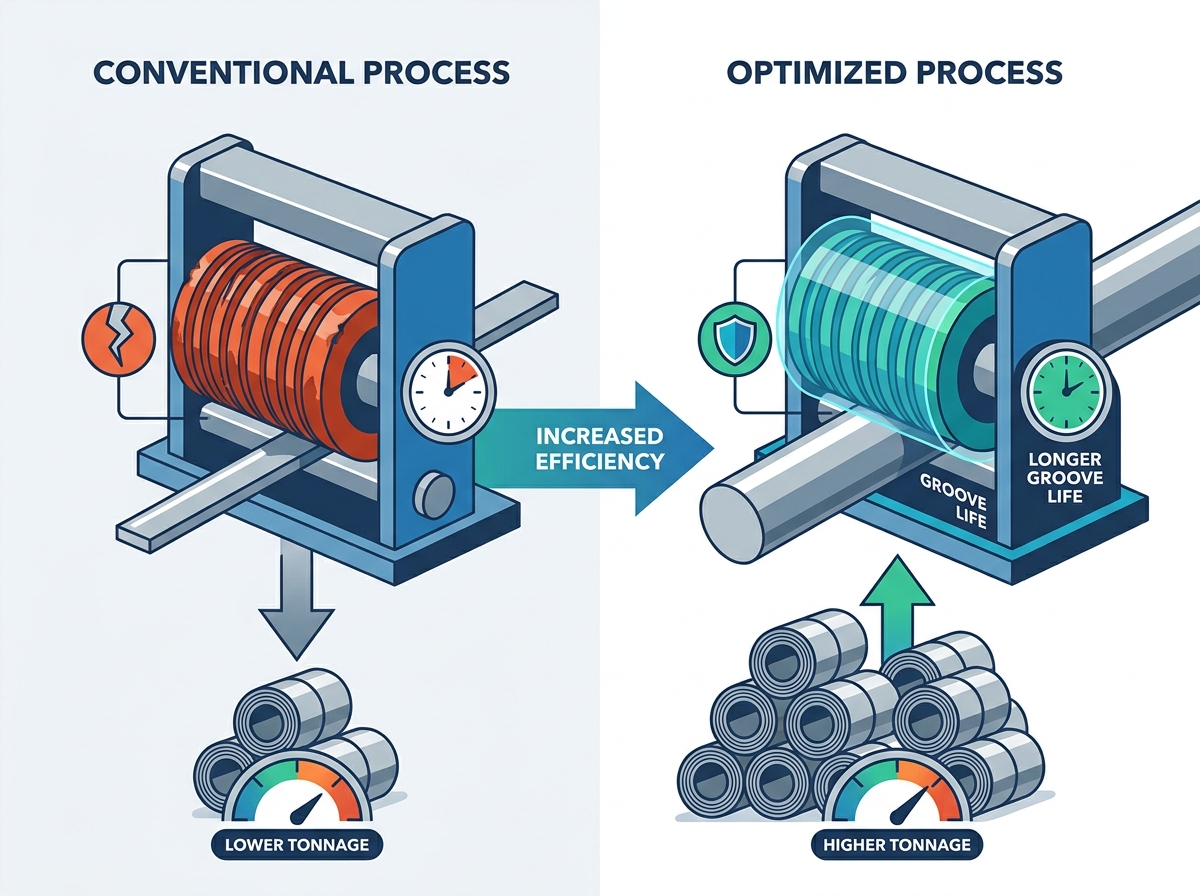
Shifting from reactive tooling replacement to a standardized, evidence-based approach to pipe preparation, machine calibration, and material handling is required to systematically increase roll groove life and sustain high-tonnage output. Operators must understand the mechanical limits of their equipment and implement strict procedural controls to prevent catastrophic die failure. You cannot simply force a machine to work faster without paying the price in destroyed tooling and rejected pipe joints.
Weld Seam Preparation is Non-Negotiable: Grinding pipe seams flush on both the O.D. and I.D. is the single most effective baseline action to prevent catastrophic damage to roll grooving machines.
Feed Rate Dictates Tool Longevity: Over-pressurizing hydraulic feeds to speed up cold forming increases tooling stress exponentially; controlled, consistent feed rates yield higher total tonnage per roll set.
Material Specificity Matters: Carbon steel, stainless steel, and varying pipe schedules require distinct tooling geometries and hardness ratings to prevent premature galling or cracking.
Standardized Operator Protocols: Implementing strict setup, ergonomic calibration, and rapid roll-change checklists reduces operator-induced tool wear and ensures compliance with industry grooving standards.
Table of Contents
Defining the baseline metrics for tooling success requires tracking total steel tonnage processed versus the frequency of replacement rolls and associated downtime. Understanding the physical forces at play is the first step in mitigating premature wear. You need to look at the actual mechanics happening at the point of contact between the die and the pipe wall.
Roll grooving is fundamentally a cold forming process. It relies on the displacement of metal rather than the removal of metal seen in cut grooving. The grooving rolls apply immense radial pressure to push the pipe wall into a specific profile. Continuous cyclic loading against the yield strength of standard and heavy-wall steel pipe causes micro-abrasions. Over thousands of cycles, this constant radial stress leads to eventual metal fatigue in the tooling dies.
When you cut a groove, you remove material. When you roll a groove, you are forcing the steel to move. This requires massive hydraulic pressure. The lower roll supports the pipe while the upper roll drives down. The steel must yield. If you push too hard, the tooling takes the brunt of the force. This is why understanding the yield strength of the specific pipe schedule you are working with is mandatory for any operator.
When grooving rolls encounter unground longitudinal weld seams, the machine experiences severe mechanical shock. The sudden spike in resistance forces the roll die to jump or bind. Failing to grind seams flush on both the outside diameter (O.D.) and inside diameter (I.D.) leads to immediate micro-fractures in the roll dies. This oversight produces uneven groove depths and compromises the mechanical integrity of the final pipe joint.
Think about a car hitting a speed bump at 60 miles per hour. That is what happens to your upper roll die when it hits a heavy weld seam. The hardened steel of the die does not flex; it chips. You must grind that seam down to the base metal. A quick pass with an angle grinder saves thousands of dollars in replacement dies over a year.
Friction dynamics play a critical role in tool degradation. Galling occurs when material transfers from the pipe surface to the roll die due to excessive friction and heat. This is particularly common when processing harder alloys like stainless steel or failing to manage thermal buildup during continuous, high-tonnage runs. Once galling starts, the altered roll profile will score subsequent pipes, accelerating tool wear rapidly.
Stainless steel is notorious for this. It work-hardens as you form it. If you do not use the correct lubricant or if you run the machine too fast, the heat builds up instantly. The stainless steel literally welds itself to the roll die in microscopic patches. Once that happens, the die is ruined and will destroy every piece of pipe you run through it afterward.
Processing varying pipe sizes, ranging from 1/2-inch up to 20-inch diameters, scales up the mechanical stress on the machine's shaft, bearings, and roll profiles. Larger diameters and heavier schedules require significantly more hydraulic force to yield the steel. This alters the wear pattern of the tool, placing asymmetrical loads on the bearings if the pipe is not perfectly supported and tracked.
A 2-inch Schedule 10 pipe requires minimal force. A 12-inch Schedule 40 pipe requires the machine to operate near its maximum capacity. The bearings take a massive load. If the pipe stand is off by even a fraction of an inch, that load transfers unevenly to the roll die, causing it to wear on a taper. You will end up with grooves that are deep on one side and shallow on the other.
Implementing actionable, process-level interventions is necessary to extend tooling durability. Small adjustments in preparation and operation yield massive gains in total tonnage processed. You have to control the variables before the pipe ever touches the machine.
Establish strict tolerances for pipe end squareness. Out-of-square ends cause the pipe to track improperly, placing asymmetrical lateral stress on the grooving rolls and forcing the operator to overcompensate with the tracking angle. Mandate a standardized deburring and internal/external seam-grinding protocol prior to the pipe entering the machine. A smooth, square pipe end is the foundation of tool preservation.
Cut the pipe perfectly square using a calibrated band saw or pipe cutter.
Use a heavy-duty grinder to remove the internal weld flash back at least two inches from the pipe end.
Grind the external weld seam completely flush with the pipe wall.
Wipe the pipe end clean of all grinding dust and metal shavings.
Accurate pump and hydraulic ram positioning ensure operator safety, comfort, and consistent downward force. Ergonomic considerations matter; adjustable pump locations minimize operator fatigue-induced feeding errors. Always verify the pipe level and tracking angle before initiating the cold forming process. A pipe that is not perfectly level will walk off the roll, causing severe edge wear on the dies.
Use a high-quality torpedo level on the pipe before you start the pump. Adjust your pipe stands so the pipe is perfectly horizontal. Then, set your tracking angle. The pipe should naturally pull itself into the machine. If the operator has to physically push the pipe to keep it on the roll, your setup is wrong, and you are destroying your tooling.
Portable jobsite groovers require different handling than heavy-duty stationary shop machines. Environmental variables on jobsites, such as unstable ground, dirt, and temperature fluctuations, accelerate roll wear. You cannot treat a portable machine sitting in the mud the same way you treat a bolted-down shop machine.
Environment | Primary Wear Factors | Mitigation Strategy |
|---|---|---|
Jobsite (Portable) | Uneven ground, debris, manual tracking errors. | Use heavy-duty pipe stands, clear debris daily, verify level frequently. |
Fabrication Shop | High-volume thermal buildup, operator fatigue. | Implement automated tracking, enforce cooling intervals, use ergonomic setups. |
Outdoor Winter Conditions | Cold hydraulic fluid, brittle metal. | Allow machine to warm up, cycle pump without load, store dies indoors. |
There is a direct trade-off between cycle time and tool wear. Over-pressurizing the hydraulic feed forces the dies into the steel faster than the material can naturally yield. Establish optimal feed rates that allow the steel to deform smoothly without forcing the dies. This controlled approach maximizes the total tonnage processed over the tool's lifespan and prevents excessive pipe flare.
Watch the pipe, not the pump. The pipe should rotate at least one full revolution for every minor adjustment of the hydraulic ram. If you pump the handle three times before the pipe makes a full turn, you are pushing too fast. The steel needs time to move. Rushing the process flares the pipe end and puts massive stress on the upper roll bearing.
Implement quick-change protocols to encourage operators to swap roll sets promptly when changing schedules or materials. Using a standard roll on heavy-wall pipe or stainless steel guarantees rapid tool destruction. Routine maintenance, including greasing bearings and inspecting shafts for deflection, keeps the machine operating within factory tolerances.
Keep your roll sets organized and clean. When switching from carbon to stainless, change the rolls immediately. Do not try to run "just one piece" of stainless on carbon rolls. You will contaminate the stainless pipe and likely gall the carbon roll. Grease the main shaft zerk fittings every single shift. Dry bearings lead to shaft deflection, which ruins the roll dies.
Assessing whether current equipment is the bottleneck or if process improvements will suffice requires evaluating tooling materials, scalability, and mechanical limits. Sometimes the process is fine, but the hardware is inadequate for the tonnage you are pushing.
Standard ductile iron rolls are sufficient for standard carbon steel, but high-tonnage operations benefit from hardened steel or specialized alloy rolls. Evaluate the return on investment of premium tooling. While the initial cost is higher, the extended run time and reduced changeout frequency often justify the upgrade for continuous production environments.
If you are running Schedule 40 pipe all day, every day, standard rolls will wear out quickly. Upgrading to a premium hardened steel roll set might cost twice as much upfront, but it will last four times as long. Track your tooling costs per ton of steel processed to make an informed decision.
Stainless steel presents specific metallurgical challenges, primarily severe work hardening. Using standard carbon steel rolls on stainless pipe leads to rapid galling and tool failure. Dedicated stainless-steel roll sets are necessary to prevent cross-contamination and to withstand the higher compressive forces required to yield the alloy.
Stainless rolls have a different profile and are made from different alloys to prevent material transfer. You also need to use a specific grooving lubricant designed for stainless steel. Never use standard cutting oil. The right lubricant creates a barrier that stops the galling process before it starts.
Know when to transition from roll grooving to cut grooving. For pipe diameters over 20 inches or ultra-heavy wall schedules, the radial force required to cold form the groove exceeds the safe operating limits of standard roll groovers. Switching to cut grooving for these specific applications protects the integrity of your roll grooving equipment.
You can physically force a machine to roll groove a piece of 24-inch Schedule 80 pipe, but you will likely destroy the main bearing in the process. Cut grooving removes the material, placing almost zero radial stress on the machine. Know your machine's limits and respect them.
Automated or power-assisted tracking and feed systems reduce human error. They maintain consistent hydraulic pressure and tracking angles, which directly extends tool life compared to fully manual operations where operators might rush the feed rate or misalign the pipe.
A power feed system applies the exact same pressure every single time. It does not get tired at the end of a ten-hour shift. It does not rush the job to go to lunch. If you are running a high-volume fabrication shop, an automated feed system is the best investment you can make to protect your tooling.
Identifying where high-tonnage initiatives typically fail allows facility managers to safeguard the process and protect equipment investments. You have to monitor the output constantly.
The most common risk is inexperienced operators applying maximum hydraulic pressure to speed up the groove. This results in immediate tool degradation and out-of-spec pipe flare. Mitigate this by developing mandatory, documented training programs focusing on the relationship between hydraulic pressure, material yield, and tool longevity.
Do not just tell an operator how to run the machine; explain why it works that way. Show them a destroyed roll die and explain that it costs a thousand dollars to replace. Teach them to listen to the machine. A groover running correctly has a steady, rhythmic sound. A groover being pushed too hard groans and pops.
Tool wear is often imperceptible until a batch of pipe fails a gauge test or exhibits excessive end flare. Implement a strict statistical process control schedule. Require diameter and flare measurements using a Pi tape or go/no-go gauge every specific number of grooves to detect tool wear early before it causes widespread joint failures.
Measure the pipe O.D. before grooving.
Measure the groove diameter using a Pi tape after the first groove of the shift.
Check the groove depth with a go/no-go gauge every ten cuts.
Measure the pipe end flare. If it exceeds specifications, slow down your feed rate immediately.
Pushing equipment past its rated capacity to meet tonnage quotas risks violating industry specifications. Align production schedules with the verified continuous-duty ratings of the specific machinery being used. Never sacrifice groove specification compliance for raw output speed.
A rejected pipe joint costs ten times more than the time you saved by rushing the groove. If the pipe does not meet AWWA or Victaulic specifications, it is scrap metal. Keep your machines running within their limits, and your tonnage will take care of itself through consistent, uninterrupted production.
Conduct an immediate audit of the shop's pipe preparation station to ensure 100% compliance with weld seam grinding.
Review the scrap rate of current roll dies to establish a baseline for improvement.
Standardize operator training to focus on controlled hydraulic feed rates rather than maximum speed.
Implement a mandatory Pi tape measurement protocol every ten grooves to catch tool wear early.
Beyond daily tooling control, dependable roll performance also begins with experienced manufacturing, material engineering, and consistent quality management. Founded in 2007, Anhui Huanbowan High Speed Steel Mill Roll specializes in high-speed steel rolls and roll rings for hot-rolled plate, strip, bar, wire, steel tube, and section-steel applications, supported by integrated casting, heat-treatment, machining, quality-control, and technical R&D capabilities.
A: Failure to grind internal and external weld seams flush, leading to mechanical shock and chipping of the roll dies.
A: Use dedicated roll sets designed specifically for stainless steel to handle the material's tendency to work-harden, and utilize appropriate lubricants to prevent galling.
A: Yes, heavier schedules require more compressive force to cold form, which accelerates tool fatigue compared to grooving standard or light-wall pipe.
A: Excessive flare is typically caused by applying the hydraulic feed too rapidly, forcing the material outward rather than allowing it to yield into the groove profile, which also severely damages the tooling.
A: While roll grooving is efficient for common sizes (usually up to 12" or 20" depending on wall thickness), ultra-heavy wall pipes or large diameters should be cut grooved to prevent catastrophic load-induced wear on roll groover bearings and dies.
A: Jobsite environments expose equipment to uneven surfaces and debris, which can cause tracking misalignment and uneven roll wear. Stationary fabrication shops offer stable, level alignments that naturally extend tool life.
A: Visual inspections should occur daily, but dimensional verification of the grooved pipe using a Pi tape or go/no-go gauge should be conducted at regular intervals during every shift to indirectly monitor tool degradation.