Views: 0 Author: Site Editor Publish Time: 2026-08-05 Origin: Site
Continuous rebar production faces a persistent operational bottleneck on the mill floor. Frequent roll changes in finishing stands directly erode mill utilization rates and drag down overall yield. Traditional high-nickel-chromium or indefinite chill cast iron rolls simply cannot survive under modern high-speed, high-reduction conditions. When pushed, these conventional materials suffer rapid surface roughening and accelerated groove wear, forcing operators to pull the stand prematurely.
High-Speed Steel (HSS) rolls provide the definitive mechanical solution. They serve as the industry standard for extending rolling campaigns and keeping the mill running. Implementing HSS rolls for rebar mill operations transforms production efficiency. However, successful adoption of HSS rolls requires strict alignment between roll metallurgy, mill cooling capabilities, and in-house machining infrastructure. You cannot just drop an HSS roll into an old stand and expect miracles without adjusting your water headers and guide rollers.
Capacity Multiplier: Properly specified HSS rolls can deliver 3 to 5 times the single-groove passing capacity compared to conventional high-nickel-chromium alternatives.
Application Specificity: Maximum ROI is achieved when HSS rolls are strategically deployed in intermediate and finishing stands where wear resistance and surface finish are critical.
Manufacturing Method Matters: The choice between Continuous Pouring for Cladding (CPC) and centrifugal casting dictates the roll's radial hardness gradient and suitability for specific rebar diameters (e.g., 13mm vs. 36mm).
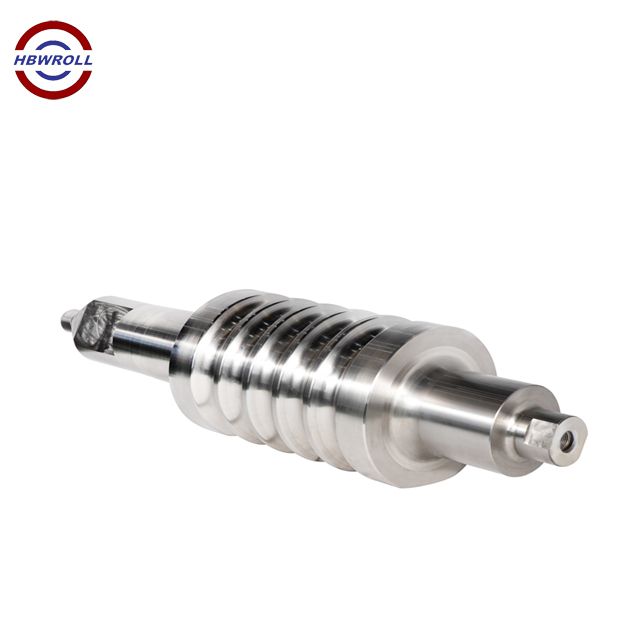
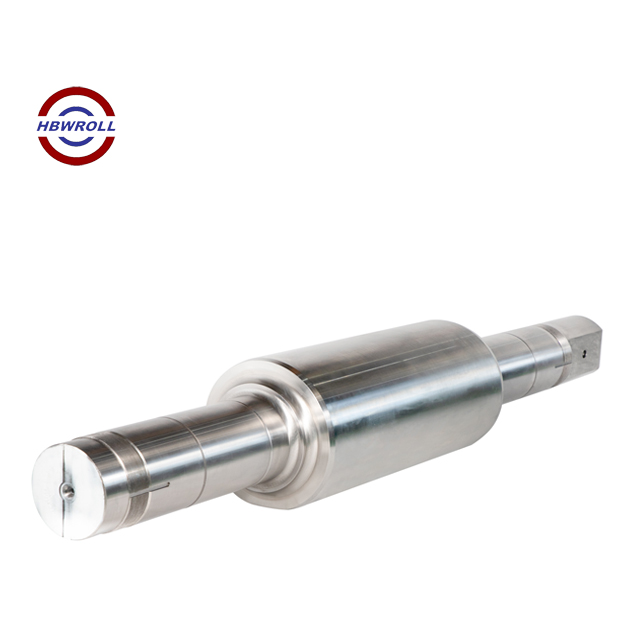
Sizing Benchmarks: A standard 380 mm diameter finishing roll serves as the baseline benchmark for rolling 13mm to 36mm rebar sizes under high-speed continuous conditions.
Infrastructure Prerequisites: Upgrading to HSS requires mandatory audits of the mill's water cooling systems to prevent thermal cracking and an assessment of roll shop machining capabilities.
Table of Contents
Evaluating roll performance requires strict, quantifiable baseline metrics from the pulpit. Mill operators must track tons per millimeter of wear. You must also monitor the frequency of roll changes per shift. Consistency of rebar dimensional tolerances serves as the primary quality indicator for the final product. HSS materials fundamentally alter these metrics by pushing the physical boundaries of continuous rolling campaigns.
When you evaluate a new roll material, you look at the scrap bin and the production log. Traditional rolls lose their groove profile quickly. This leads to out-of-tolerance rebar, specifically regarding the rib height and overall diameter. HSS maintains its groove geometry for thousands of tons. This stability means operators spend less time tweaking the gap and more time pushing billets through the furnace.
We measure success by the reduction in cobbles and the extension of the campaign life. If a standard cast iron roll requires a changeout every 800 tons on a 16mm rebar product, an optimized HSS setup should push that number well past 3,000 tons. This massive jump in single-groove tonnage yield directly impacts the shift's bottom line.
The microstructure of high-speed steel dictates its superior performance on the mill. HSS contains a rich, dense matrix of hard carbides. These include MC, M2C, and M7C3 carbides. These specific carbides provide extreme wear resistance against the abrasive hot steel stock. High-nickel-chromium and standard cast iron lack this dense carbide network, leaving their softer matrix exposed to rapid degradation under high friction.
Switching to HSS yields measurable production gains. Field data consistently shows HSS delivers three to five times the capacity of conventional rolls. This capacity multiplier drastically reduces mill downtime. Fewer roll changes mean higher daily tonnage output and less physical strain on the maintenance crew handling the heavy rigging.
Material Type | Primary Carbides | Wear Resistance | Thermal Shock Sensitivity | Typical Campaign Multiplier |
|---|---|---|---|---|
Indefinite Chill Cast Iron | M3C | Low | Low | 1.0x (Baseline) |
High-Nickel-Chromium | M7C3, M3C | Moderate | Moderate | 1.2x - 1.5x |
High-Speed Steel (HSS) | MC, M2C, M7C3 | Extremely High | High (Requires strict cooling) | 3.0x - 5.0x |
Strategic placement of HSS rolls maximizes their mechanical effectiveness. They perform best in intermediate and finishing stands. These specific positions demand extreme wear resistance due to the high speed of the bar. Surface finish quality is also critical in these final passes to ensure the rebar ribs form correctly. HSS maintains its groove profile far longer than cast iron, ensuring sharp, distinct ribs on the finished bar.
High-speed continuous rolling generates intense friction at the roll bite. This friction causes severe surface roughening on standard rolls, leading to a dull, out-of-spec product. HSS mitigates this roughening effect entirely. The hard carbide matrix resists abrasive wear from the hot steel stock. This ensures the final rebar product maintains strict dimensional tolerances from the first billet to the last.
Selecting the right roll requires understanding the exact manufacturing processes used at the foundry. The casting method determines the roll's structural integrity under heavy reduction. It also dictates the usable depth of the hardened shell. You must match the casting process to your specific groove designs and mill loads.
The Continuous Pouring for Cladding (CPC) process offers distinct mechanical advantages for heavy-duty applications. CPC creates a formidable metallurgical bond. This bond joins the high-alloy HSS shell to a tough, ductile forged steel core. CPC maximizes the allowable shell depth. It also ensures structural uniformity throughout the roll body, preventing hard spots that cause machining nightmares.
Centrifugal casting provides a different set of characteristics. The foundry spins molten metal at high speeds to form the outer shell. This process limits the maximum allowable shell thickness due to centrifugal physics. Centrifugal casting also produces a steeper radial hardness gradient. CPC generally outperforms centrifugal casting for deep-groove applications, such as rolling large 36mm rebar.
Assess Groove Depth: Measure the maximum depth of your largest rebar pass. If it exceeds the safe shell limit of a centrifugally cast roll, you must specify CPC.
Evaluate Core Requirements: High-impact intermediate stands require maximum core toughness. CPC allows for a forged core, offering superior shock resistance compared to a cast core.
Check Machining Allowances: Ensure the chosen casting method provides enough uniform hardness depth to allow for multiple redressings down to the scrap diameter.
Shore hardness (HS) dictates wear performance on the mill floor. The optimal range for rebar finishing applications sits tightly between 75 and 85 HS. This specific range balances extreme wear resistance with the necessary toughness to prevent catastrophic brittle failure. A flat radial hardness gradient is absolutely crucial. It ensures consistent wear rates even after the roll shop has redressed the roll multiple times.
Rolls must maintain their performance down to the minimum usable diameter. Roll design constraints directly affect casting method selection. Deep pass grooves require a thick, uniform shell. Collar dimensions also dictate the necessary shell depth. If the hardness drops off too quickly, the bottom of the groove will wear out faster than the sides, ruining the rebar profile.
High-speed rolling generates extreme surface temperatures at the contact zone. A dark oxide film forms on the HSS roll surface during operation. This film plays a critical protective role. It prevents metal-to-metal adhesion between the roll and the hot stock. Without this film, severe galling occurs, tearing chunks of steel from the bar and welding them to the roll.
Specific alloying elements enhance high-temperature stability. Tungsten and Molybdenum provide secondary hardening during the tempering process. Vanadium creates the hardest MC carbides for pure abrasion resistance. Chromium improves oxidation resistance, helping that vital oxide layer form quickly and evenly. Together, these elements provide exceptional tempering resistance, preventing the roll from softening during long, hot campaigns.
Roll specifications must align perfectly with your specific mill parameters. Rebar diameter dictates groove geometry and shell depth. Mill speed dictates thermal loads and cooling requirements. You cannot apply a universal HSS specification to all rolling mills and expect good results.
Rebar diameter directly influences roll design and material selection. Standard production ranges from 13mm to 36mm. Larger diameters require significantly deeper pass grooves. This necessitates a thicker hardened HSS shell to ensure the bottom of the groove remains in the high-hardness zone. The industry standard 380 mm diameter finishing roll serves as a reliable baseline reference for evaluating these parameters.
You must evaluate roll neck strength against these groove depths. Deep grooves reduce the effective cross-sectional area of the roll body, weakening it. High-hardness materials are inherently sensitive to stress concentrations. Groove design must incorporate proper radii at the root to prevent crack initiation. Sharp corners in an HSS groove will almost certainly lead to a broken roll under heavy load.
Selection criteria vary heavily based on mill configuration. Continuous wire and rod mills operate differently than dedicated continuous rebar mills. Rebar mills handle larger stock cross-sections. This generates higher thermal loads and requires more torque. Mechanical shock profiles are also more severe in rebar production, demanding tougher roll cores.
Rolling speeds dictate the necessary thermal conductivity of the roll core. High speeds reduce the time available for heat dissipation between bites. The roll core must absorb and transfer heat efficiently away from the shell. Proper core material selection prevents thermal build-up, which leads to core expansion, shell stress, and subsequent roll failure.
Mill Parameter | Impact on HSS Roll Specification | Required Adjustment |
|---|---|---|
High Rolling Speed (>15 m/s) | Increases thermal load and friction | Increase cooling water pressure; optimize oxide film formation |
Large Rebar Diameter (32mm+) | Requires deep pass grooves | Specify CPC casting for thicker, uniform hardened shell |
High Reduction Ratio | Increases mechanical stress and torque | Select forged steel core for maximum shock resistance |
You cannot ignore the reality of machining HSS rolls. Their extreme hardness makes redressing difficult, loud, and time-consuming. If your roll shop is equipped only with older, low-horsepower lathes and standard carbide tooling, you will fail to maintain these rolls. Upgrading to HSS requires a simultaneous upgrade in your machining infrastructure.
Standard carbide inserts will burn up instantly against an 80 HS high-speed steel roll. You must invest in specialized turning tools. Polycrystalline Cubic Boron Nitride (PCBN) inserts are the standard for turning HSS. Heavy-duty ceramic inserts also work for roughing passes. These tools require rigid, high-power CNC roll lathes. Any vibration or chatter in the lathe will shatter the brittle PCBN inserts immediately.
Machining parameters must be strictly controlled. Cutting speeds are generally lower than when turning cast iron, but feed rates must remain consistent to prevent work hardening the roll surface. The roll shop must program the CNC to maintain exact groove geometries, as the tight tolerances of HSS rolling demand perfect pass profiles.
Upgrading to HSS introduces new operational challenges on the floor. These rolls demand precise environmental control. Improper handling leads to catastrophic, explosive failures. You must adapt your mill practices, retrain your operators, and adjust your setups to accommodate HSS characteristics.
HSS rolls are highly sensitive to thermal shock. Inadequate cooling is the primary cause of premature failure. You must supply high-pressure water directly to the roll bite. Exact water pressure and volume are non-negotiable. We typically look for a minimum of 10 to 12 bar of pressure at the header, delivering a massive volume of clean water.
Proper nozzle alignment maintains the protective oxide film. It prevents localized overheating. Insufficient cooling causes rapid temperature fluctuations on the roll surface. This leads directly to fire cracking. Fire cracks propagate quickly through the hard HSS shell, causing massive spalling that can wreck a stand and halt production for hours.
Install high-pressure booster pumps dedicated solely to the finishing stand water headers.
Use flat-fan nozzles angled precisely at the exit side of the roll bite to strip away the steam boundary layer.
Implement daily nozzle inspections to clear scale and debris that block water flow.
Ensure water filtration systems are working to prevent nozzle clogging during a campaign.
Cold HSS rolls are brittle. You must implement strict warm-up protocols before rolling campaigns. Gradually introducing hot stock or using induction heaters prevents catastrophic brittle failure. Never hit a freezing cold HSS roll with a fast, heavy billet. Mill setup also requires precise adjustments. HSS has a lower bite coefficient than traditional iron rolls, meaning it is more slippery.
Stock control is critical. You must adjust guide rollers to keep a standard, consistent amount of stock entering the pass. Precise guide calibration offsets the lower friction coefficient. This prevents slippage during the initial bite. It also prevents overfilling the pass, which causes cobbles and severe guide wear.
Operators must recognize early warning signs of failure before they cause a cobble. Spalling often originates from deep-seated thermal fatigue. Thermal fatigue cracking appears as a fine, distinct network on the roll surface. Uneven wear indicates improper cooling, blocked nozzles, or severe guide misalignment.
Corrective actions must be immediate. If thermal cracking appears, increase cooling water pressure immediately. Adjust nozzle angles to target the exit side of the roll bite more aggressively. If uneven wear occurs, verify guide roller alignment and check for worn guide boxes. During redressing, the roll shop must grind out all micro-cracks entirely to prevent propagation during the next campaign.
HSS rolls represent a mandatory mechanical upgrade for high-capacity rebar mills looking to maximize uptime. They drastically increase single-groove tonnage and improve overall mill utilization. However, this upgrade requires strict adherence to cooling and machining prerequisites. Facilities that adapt their infrastructure see massive gains in prime yield and operational efficiency.
Audit your existing water cooling capacity to ensure it delivers a minimum of 10 bar pressure directly to the roll bite.
Evaluate your roll shop's machining readiness, specifically regarding high-rigidity CNC lathes and PCBN tooling inventory.
Run a controlled pilot test on a single finishing stand using a standard 380 mm diameter HSS roll to establish baseline metrics.
Consult with a metallurgical engineer to specify exact shell thickness and carbide structure based on your maximum rebar diameter.
Implement strict pre-heating protocols for all new HSS rolls before introducing them to the active mill line.
A: HSS rolls deliver 3 to 5 times the single-groove passing capacity of traditional high-nickel-chromium rolls. Total lifespan depends on rebar diameter, mill configuration, and the number of available redressings. A well-maintained HSS roll can process tens of thousands of tons before reaching its minimum scrap diameter.
A: HSS rolls possess extreme Shore hardness (75-85 HS). Machining requires high-rigidity, high-power CNC roll lathes. Standard carbide tools will fail instantly. Roll shops must invest in specialized cutting tools, such as Polycrystalline Cubic Boron Nitride (PCBN) or heavy-duty ceramic inserts, to redress HSS efficiently.
A: HSS materials are highly susceptible to thermal shock. Inadequate cooling causes rapid temperature spikes, leading to severe fire cracking. Proper high-pressure cooling maintains the essential protective oxide film. This film prevents metal-to-metal adhesion, reduces friction, and stops premature wear and galling.
A: Continuous Pouring for Cladding (CPC) creates a thicker, more uniform hardened shell with a flat radial hardness gradient. It forms a highly tough, shock-resistant forged core with a flawless metallurgical bond. Centrifugal casting is limited in shell thickness and exhibits a steeper drop in hardness toward the core.
A: While technically possible, HSS rolls are rarely used in roughing stands. Roughing stands require extreme bite and high-impact resistance. HSS is best reserved for intermediate and finishing stands, where its exceptional wear resistance and ability to hold a precise surface finish yield the highest return on investment.
A: HSS has a lower friction coefficient than cast iron. Precise guide roller calibration is mandatory to feed a standard, consistent amount of stock into the pass. Proper guide adjustment prevents stock slippage and ensures the groove is not overfilled, preventing cobbles and uneven wear.
A: Spalling is typically caused by deep-seated thermal fatigue from inadequate cooling pressure. It can also result from mechanical overloads, exceeding maximum allowable reduction ratios, or failing to grind out micro-cracks during routine redressing. Once a thermal crack propagates into the shell, spalling is imminent.