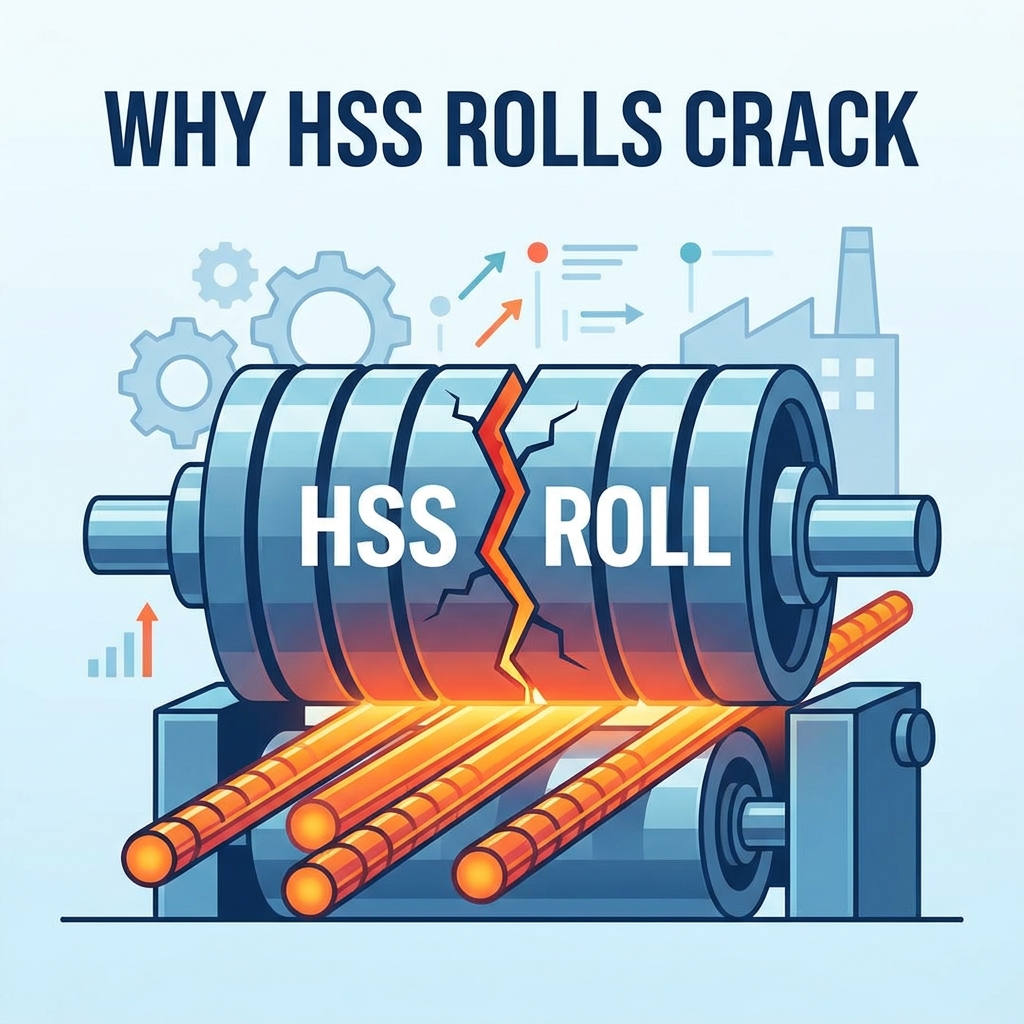
HSS roll cracking in rebar mills is mainly driven by repeated thermal cycling, frictional shear stress, heavy rolling loads, and improper cooling. This article explains how fire cracks develop into deeper fatigue cracks and large-area spalling, while also examining metallurgical risks such as excessive hardness, coarse carbide networks, and residual stress. It outlines practical prevention measures, including stable high-pressure cooling, correct pass design, disciplined grinding, post-grinding NDT, and immediate response after stalls or cobbles. These controls help extend roll life, reduce downtime, and prevent roll-related defects in finished rebar.
Read More